Diverticulitis: Root Causes and How to Help Prevent Flare-Ups

Updated: Oct 21
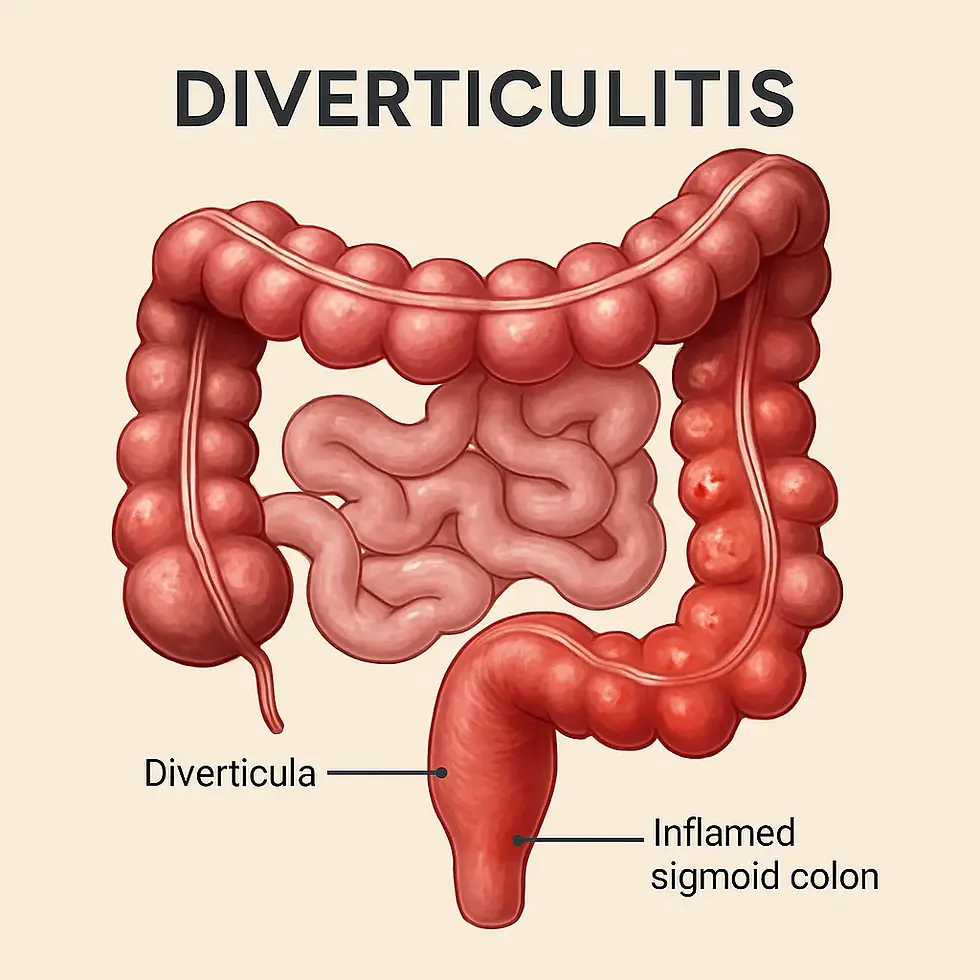
Quick answer:
Diverticulitis happens when small pouches in the colon wall become inflamed or infected. The flare is only part of the story. The bigger question is why it happened, and what keeps it coming back. Common root causes include constipation and straining, a low-fiber diet, inactivity, smoking, extra weight, certain medications, and an unhealthy gut. Working on those is how you lower your chances of the next flare.
If you've had a diverticulitis flare, you know how scary and painful it can be: sharp pain low on the left side, fever, nausea, and wondering when it's going to happen again. Most people get antibiotics or a liquid diet to get through the flare, then get sent home with very little guidance on how to keep it from coming back. That's exactly where a root-cause approach comes in.
What is diverticulitis?
As we age, small pouches called diverticula can form in the wall of the colon. Having these pouches is called diverticulosis, and it's very common, especially after 50. Most people with diverticulosis never have symptoms. Diverticulitis is when one or more of those pouches becomes inflamed or infected.
What are the symptoms of a diverticulitis flare?
Common symptoms include pain in the lower belly (usually the lower left side), fever, nausea or vomiting, a change in bowel habits like constipation or diarrhea, and belly tenderness.
Red flags: get help right away
Go to urgent care or the ER if you have severe or worsening belly pain, a high fever, vomiting and can't keep fluids down, or blood in your stool. A bad flare can lead to an abscess or a tear in the colon, so don't wait it out at home.
What causes diverticulitis?
There's rarely just one cause. These are the most common root causes.
1. Constipation and straining
Hard stools and straining put extra pressure on the colon wall, which is linked to pouches forming and becoming irritated.
2. A low-fiber diet
Diets low in fiber and high in red and processed meat are linked to a higher risk of diverticulitis.
3. Not moving enough
Regular physical activity is linked to a lower risk. Movement also helps keep your bowels regular.
4. Extra weight and smoking
Carrying extra weight, especially around the middle, and smoking both raise the risk of diverticulitis and its complications.
5. Certain medications
Regular use of NSAIDs like ibuprofen and naproxen, opioids, and steroids is linked to a higher risk of flares and complications.
6. An unhealthy gut
Changes in gut bacteria and ongoing inflammation may help explain why some people with diverticulosis develop diverticulitis and others never do. A healthier gut is a big part of lowering your risk.
Do nuts, seeds, and popcorn cause diverticulitis?
For years, people with diverticulosis were told to avoid nuts, seeds, and popcorn. Research has not found that these foods cause flares, and most people can enjoy them.
How to help prevent diverticulitis flare-ups
Once a flare has fully calmed down, these steps can help lower the chance of another one:
Slowly increase fiber from vegetables, fruits, beans, and whole grains, adding a little at a time so your gut can adjust. Drink plenty of water, since fiber works best with fluids. Stay active most days, even with walking. Work toward a healthy weight. Stop smoking if you smoke. Limit red and processed meat. Cut back on regular use of NSAIDs like ibuprofen where you can. And don't ignore constipation. Regular, easy bowel movements take pressure off the colon.
One thing you can try today
If you're not in a flare, add one glass of water to each meal and one extra serving of cooked vegetables to your day. Small, steady changes are easier on your gut than big ones. Then watch how your bowels respond.
Our free Gut Motility Symptom Tracker can help you track constipation, bowel movements, and how you feel after meals.
When it's time to dig deeper
If you've had more than one flare, deal with ongoing constipation, or still have belly pain or bloating between flares, it's time to find out what's really going on with your gut. Testing like gut and stool testing can show inflammation and imbalances in gut bacteria, so you can work on the root causes instead of waiting for the next flare.
FAQs
What is the main cause of diverticulitis?
There's no single cause. Common root causes include constipation and straining, a low-fiber diet, inactivity, extra weight, smoking, certain medications like NSAIDs, and an unhealthy gut.
Can diverticulitis be prevented naturally?
Many people can lower their risk of another flare by working on the root causes: more fiber and water, regular movement, not smoking, a healthier weight, fewer NSAIDs, and a healthier gut.
What foods should I avoid with diverticulitis?
During a flare, clear liquids or low-fiber foods are usually recommended for a short time. Long term, diets high in red and processed meat are linked to a higher risk.
Can I eat nuts and seeds if I have diverticulosis?
Research has not found that nuts, seeds, or popcorn cause flares, and most people can eat them.
Can stress cause a diverticulitis flare?
Stress hasn't been proven to cause flares directly, but it can affect digestion and bowel habits, which may play a role.
When should I go to the ER for diverticulitis?
Go right away if you have severe or worsening belly pain, a high fever, vomiting, blood in your stool, or can't keep fluids down.
Ready to stop waiting for the next flare?
You don't have to keep wondering when the next flare will hit. I work with people online, anywhere in the country, to find and fix the root causes of gut problems through deeper testing and a personal plan built around their results.
Executive Functional Healing LLC provides health education and wellness coaching. Justin Kempf is a Certified Health Coach, not a licensed physician or medical provider. "Functional medicine practitioner" describes his coaching approach and is not a medical title or license. Services are educational in nature and are not intended to diagnose, treat, cure, or prevent disease, and any discussion of supplements is educational. Medical concerns, diagnoses, medications, and treatment decisions should be discussed with a qualified healthcare professional.


Comments