Why You Wake Up Tired Even After Sleeping

Quick Answer
Waking up tired even after sleeping may involve more than sleep duration alone. Nervous system dysregulation, stress physiology, inflammation, blood sugar instability, metabolic dysfunction, hormone imbalance, and poor recovery capacity may all contribute to non-restorative sleep and chronic exhaustion.
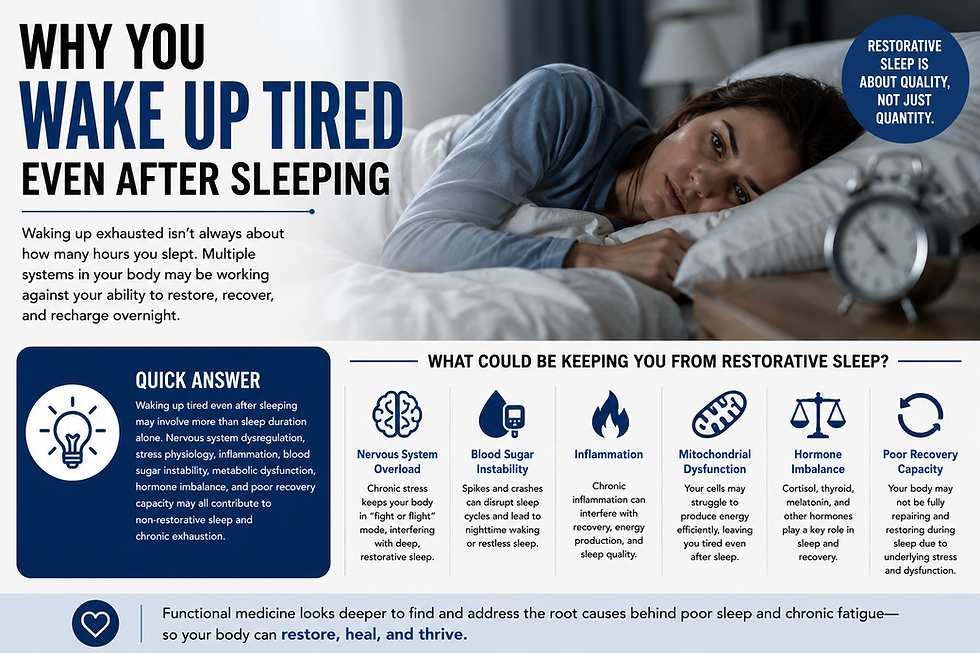
Waking up tired even after sleeping may involve nervous system overload, inflammation, blood sugar instability, metabolic dysfunction, hormone imbalance, mitochondrial stress, and impaired recovery capacity. Functional medicine focuses on identifying root-cause contributors behind non-restorative sleep and chronic fatigue.
Many people assume that sleeping longer should automatically fix fatigue.
However, many people still wake up feeling:
• exhausted
• foggy
• unrefreshed
• irritable
• low energy
• mentally drained
• sore
• overwhelmed
• “wired but tired”
At Executive Functional Healing LLC, functional medicine often looks deeper into recovery physiology because fatigue can involve far more than simply sleep quantity.
Sleep and Recovery Are Not the Same Thing
Getting enough hours of sleep does not always mean the body is recovering efficiently.
The body relies on proper nervous system regulation, metabolic balance, hormone signaling, and cellular recovery during sleep.
When recovery systems become impaired, people may experience:
• waking up exhausted
• poor resilience
• brain fog
• low motivation
• poor exercise recovery
• daytime fatigue
• unstable energy
The body may be sleeping without fully restoring itself.
Nervous System Dysregulation Can Affect Sleep Quality
The nervous system plays a major role in recovery.
Chronic stress physiology may keep the body in a prolonged fight-or-flight state, which can interfere with restorative sleep patterns.
This may contribute to:
• racing thoughts
• nighttime waking
• shallow sleep
• poor recovery
• tension
• low stress resilience
Many people remain physiologically “on alert” even while sleeping.
Blood Sugar Instability May Affect Sleep and Recovery
Blood sugar regulation plays a major role in stable energy and recovery.
Blood sugar instability may contribute to:
• nighttime waking
• restless sleep
• morning fatigue
• cravings
• unstable energy
• fatigue after meals
• shakiness
The body often struggles to maintain stable recovery when metabolic balance becomes impaired.
Inflammation and Poor Recovery Are Closely Connected
Chronic inflammation may influence:
• recovery capacity
• sleep quality
• nervous system regulation
• mitochondrial function
• energy production
• hormone signaling
This can create cycles where inflammation worsens fatigue while poor recovery further increases inflammatory burden.
Mitochondrial Function Affects Energy Restoration
Mitochondria help produce usable cellular energy throughout the body.
Poor mitochondrial function may contribute to:
• chronic fatigue
• poor resilience
• low exercise tolerance
• brain fog
• unstable energy
• exhaustion after stress
Even after sleeping, the body may struggle to fully restore energy production when mitochondrial function becomes impaired.
Hormones and Sleep Physiology Are Interconnected
Sleep and hormone signaling are closely connected.
Poor recovery may influence:
• cortisol balance
• thyroid function
• metabolism
• stress tolerance
• nervous system regulation
• energy production
The body functions as an interconnected system rather than isolated parts.
Functional Medicine Looks at Root-Cause Recovery Patterns
Functional medicine asks deeper questions, including:
• Is nervous system overload affecting recovery?
• Is inflammation increasing stress burden?
• Is blood sugar instability impairing sleep quality?
• Is metabolism functioning efficiently?
• Is mitochondrial dysfunction contributing?
At Executive Functional Healing LLC, recovery physiology is viewed as part of a larger interconnected system involving:
• nervous system regulation
• metabolism
• inflammation
• hormone balance
• blood sugar regulation
• mitochondrial function
• stress physiology
Chronic Fatigue Is Often Multifactorial
Most chronic fatigue patterns are not caused by one isolated issue.
People dealing with non-restorative sleep are often experiencing multiple overlapping stressors involving:
• nervous system overload
• metabolic dysfunction
• inflammation
• poor recovery
• hormone imbalance
• blood sugar instability
This is why symptom-only approaches often fail.
The body functions as an interconnected system, and long-term healing often requires identifying deeper root contributors.
Final Thoughts
Waking up tired even after sleeping may involve far more than sleep quantity alone.
Poor recovery physiology may contribute to:
• chronic fatigue
• brain fog
• unstable energy
• poor resilience
• inflammation
• nervous system stress
• hormone imbalance
• metabolic dysfunction
The goal should not only be temporary symptom management.
The goal should be helping the body function optimally again.
FAQs
Why do I wake up tired even after sleeping?
Waking up exhausted may involve nervous system dysregulation, poor recovery capacity, inflammation, blood sugar instability, mitochondrial dysfunction, hormone imbalance, or stress physiology.
What is non-restorative sleep?
Non-restorative sleep refers to sleep that does not fully restore energy, resilience, recovery, or mental clarity.
Can stress affect sleep quality?
Yes. Chronic stress physiology may interfere with nervous system regulation, recovery capacity, sleep quality, and restorative sleep patterns.
Can blood sugar affect sleep?
Yes. Blood sugar instability may contribute to restless sleep, nighttime waking, morning fatigue, cravings, and unstable energy.
What does functional medicine look at for chronic fatigue and poor sleep?
Functional medicine often looks deeper into nervous system regulation, metabolism, blood sugar balance, inflammation, hormone signaling, mitochondrial function, and recovery physiology.
Ready to Look Deeper Into the Root Cause?
Executive Functional Healing LLC helps clients identify possible root contributors behind chronic fatigue, poor recovery, brain fog, unstable energy, hormone imbalance, inflammation, and nervous system stress through a functional medicine approach focused on whole-body health.
Virtual consultations are available nationwide with Fort Worth, Texas serving as our primary authority location.


Comments