Why You Wake Up Between 2 AM and 4 Am

Quick Answer
Waking up between 2 AM and 4 AM may be associated with blood sugar instability, elevated nighttime cortisol, chronic stress, nervous system dysregulation, poor sleep quality, inflammation, or other underlying health imbalances. While occasional nighttime waking is common, consistently waking during these hours may signal that the body is struggling to maintain proper recovery and regulation during sleep.
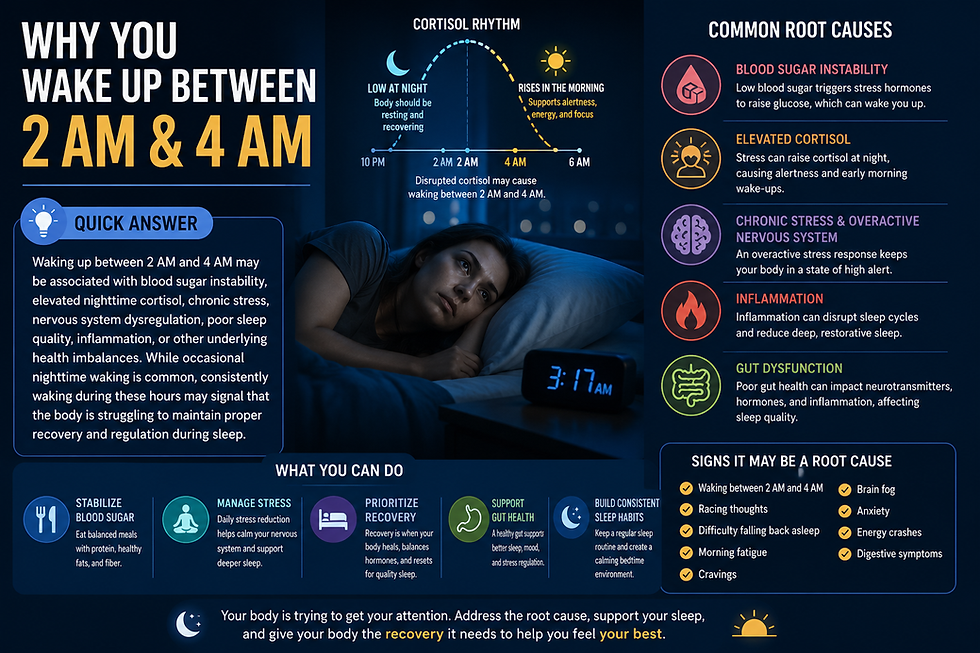
Many people struggling with waking between 2 AM and 4 AM are also dealing with chronic stress, blood sugar instability, fatigue, inflammation, and nervous system dysregulation. Executive Functional Healing LLC provides root-cause functional medicine support for sleep quality, recovery, metabolism, gut health, and overall wellness in Fort Worth, Texas and nationwide through virtual consultations.
Many people fall asleep without a problem.
The problem comes later.
They suddenly wake up at:
* 2:00 AM
* 3:00 AM
* 4:00 AM
Their mind starts racing.
They feel alert even though they are tired.
Some struggle to fall back asleep.
Others toss and turn for hours.
Many assume this is simply part of getting older.
But persistent nighttime waking often has deeper root causes.
At Executive Functional Healing LLC, many individuals struggling with fatigue, cravings, brain fog, anxiety, inflammation, and metabolic dysfunction report waking between 2 AM and 4 AM on a regular basis.
Why Sleep Matters
Sleep is one of the most important foundations of health.
Quality sleep supports:
* recovery
* hormone balance
* metabolism
* immune function
* blood sugar regulation
* nervous system repair
* cognitive performance
When sleep becomes disrupted, nearly every system in the body can be affected.
Blood Sugar Instability and Nighttime Waking
One common contributor is blood sugar instability.
During the night, the body requires stable blood sugar to maintain sleep.
If blood sugar drops too low, stress hormones may increase to bring glucose back into circulation.
This may trigger:
* waking suddenly
* increased heart rate
* sweating
* anxiety
* racing thoughts
Many people do not realize blood sugar fluctuations can affect sleep quality.
Cortisol and the Early Morning Hours
Cortisol follows a natural daily rhythm.
Ideally, cortisol remains lower at night and gradually rises toward morning.
Chronic stress may disrupt this rhythm.
Some individuals experience elevated cortisol during the night, which may contribute to:
* nighttime waking
* feeling alert at odd hours
* difficulty falling back asleep
* poor recovery
Chronic Stress and Nervous System Dysregulation
The nervous system plays a major role in sleep quality.
When the body remains in survival mode, relaxation becomes more difficult.
Many individuals experiencing nighttime waking are also dealing with:
* chronic stress
* anxiety
* burnout
* poor recovery
* nervous system overload
The body may struggle to fully enter restorative sleep states.
Inflammation and Sleep Disruption
Inflammation and sleep influence one another constantly.
Chronic inflammation may contribute to:
* lighter sleep
* more frequent waking
* poor recovery
* fatigue
* increased stress sensitivity
Likewise, poor sleep may worsen inflammation.
Gut Health and Sleep
The gut and brain communicate continuously.
Gut dysfunction may contribute to:
* inflammation
* nervous system stress
* neurotransmitter imbalances
* poor sleep quality
This is one reason digestive symptoms and sleep complaints often appear together.
Signs Your Nighttime Waking May Have a Root Cause
Common signs include:
* waking between 2 AM and 4 AM
* racing thoughts
* difficulty falling back asleep
* morning fatigue
* cravings
* brain fog
* anxiety
* energy crashes
* digestive symptoms
These symptoms frequently overlap.
Functional Medicine and Sleep
At Executive Functional Healing LLC, sleep challenges are viewed through a root-cause lens.
Instead of simply masking symptoms, a functional medicine approach may evaluate:
* blood sugar regulation
* cortisol patterns
* stress physiology
* inflammation
* gut health
* nutrient status
* hormone balance
* recovery capacity
* nervous system regulation
The goal is understanding why sleep disruption is occurring.
Strategies That May Help
Improve Blood Sugar Stability
Balanced meals may help reduce overnight blood sugar fluctuations.
Support Stress Resilience
Stress management may improve nervous system regulation and sleep quality.
Prioritize Recovery
Recovery supports hormone balance and restorative sleep.
Support Gut Health
A healthier gut environment may positively influence sleep and nervous system function.
Create Consistent Sleep Habits
Regular sleep routines help reinforce healthy circadian rhythms.
Client Success Story
One client came to Executive Functional Healing LLC struggling with frequent 3 AM waking, fatigue, brain fog, cravings, and poor recovery.
By addressing blood sugar stability, stress physiology, sleep habits, gut health, and recovery patterns, nighttime waking became less frequent and sleep quality improved significantly.
Frequently Asked Questions
Why do I keep waking up between 2 AM and 4 AM?
Blood sugar instability, elevated cortisol, chronic stress, inflammation, nervous system dysregulation, and other underlying factors may contribute.
Can cortisol wake you up at night?
Yes. Elevated nighttime cortisol may contribute to waking during the early morning hours and difficulty falling back asleep.
Can blood sugar affect sleep?
Yes. Blood sugar instability may trigger stress hormone responses that disrupt sleep.
Can stress cause nighttime waking?
Yes. Chronic stress may increase nervous system activation and interfere with restorative sleep.
Can gut health affect sleep quality?
Yes. Gut health influences inflammation, neurotransmitter production, and nervous system regulation, all of which may affect sleep.
Can functional medicine help identify root causes of sleep issues?
Functional medicine focuses on contributing factors such as blood sugar regulation, stress physiology, inflammation, gut health, hormone balance, and recovery patterns.
If you consistently wake between 2 AM and 4 AM, struggle with poor recovery, or feel exhausted despite spending enough time in bed, there may be deeper root causes affecting your sleep.


Comments